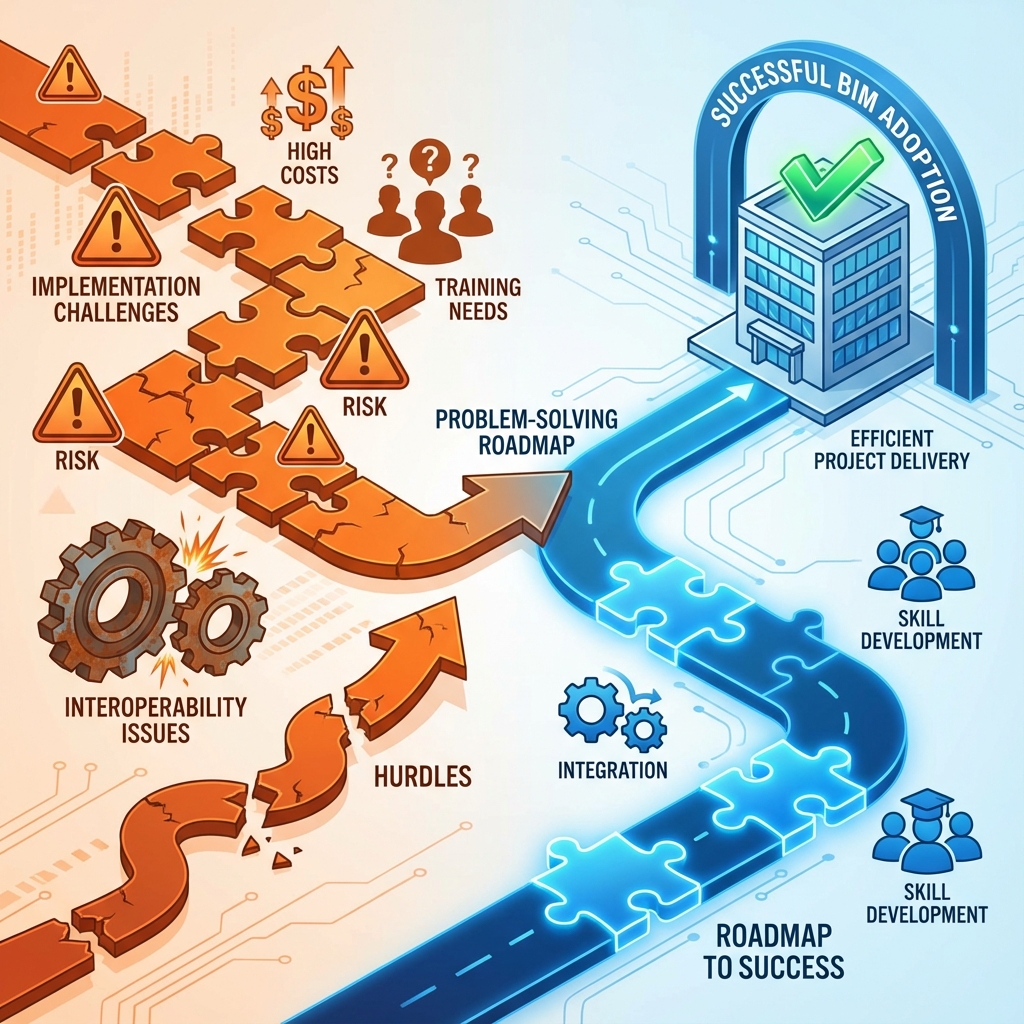
⚠️ Every Challenge Has a Solution
Understanding barriers is the first step to overcoming them. This guide provides proven strategies for each challenge.
📋 The 8 Main BIM Implementation Challenges
- High Initial Cost
- Resistance to Change
- Skills Shortage
- Interoperability Issues
- Lack of Standards
- Legal Liability
- Management Buy-in
- Technology Infrastructure
💰 High Initial Cost
❌ The Challenge
- High software costs ($3,500+/year/user)
- Powerful hardware required ($2,500+)
- Training investment ($1,000-5,000/person)
- Productivity drop initially (3-6 months)
- Template and standards development time
✅ Solutions
- Start with small pilot projects
- Use cloud versions (BIM 360, ACC)
- Phase training over 12-18 months
- Calculate 3-year ROI for management
- Consider subscription cost recovery in fees
| Cost Category | Year 1 | Year 2 | Year 3 |
|---|---|---|---|
| Software (5 users) | $17,500 | $17,500 | $17,500 |
| Hardware | $12,500 | $0 | $0 |
| Training | $10,000 | $2,000 | $1,000 |
| Productivity Loss | $15,000 | $0 | $0 |
| Total Investment | $55,000 | $19,500 | $18,500 |
| Savings from BIM | $20,000 | $60,000 | $80,000 |
Net Positive by Year 2
👥 Resistance to Change
❌ The Challenge
- "Why change? CAD works fine"
- Fear of learning new technology
- Comfort with existing workflows
- Lack of management enforcement
- Senior staff reluctance
✅ Solutions
- Involve team in decision process
- Show success stories from peers
- Identify "BIM Champions" (enthusiasts)
- Get senior management commitment first
- Start with younger, tech-savvy staff
🎓 Skills Shortage
❌ The Challenge
- Shortage of BIM-trained engineers
- Training takes 6-12 months for proficiency
- High salaries for BIM specialists
- Staff turnover after training
- Universities lag behind industry
✅ Solutions
- Create internal training program
- Partner with universities
- Use external consultants initially
- Invest in talent retention (career paths)
- Offer BIM certification incentives
| Skill Level | Training Time | Capabilities |
|---|---|---|
| Basic User | 2-4 weeks | Navigate model, basic edits, views |
| Proficient User | 3-6 months | Create models, families, sheets |
| Advanced User | 6-12 months | Templates, complex families, coordination |
| BIM Manager | 1-2 years | Standards, workflows, training others |
🔄 Interoperability Issues
❌ The Challenge
- Different software doesn't talk well
- Data loss during conversion
- IFC isn't always perfect
- Version compatibility issues
- Proprietary format lock-in
✅ Solutions
- Standardize software where possible
- Use neutral coordination platforms
- Test exchange protocols early
- Define clear protocols in BEP
- Use IFC 4.0 for better fidelity
📋 Lack of Standards
❌ The Challenge
- No local standards in some countries
- Each company works differently
- Coordination difficulty between parties
- Inconsistent LOD expectations
- No clear deliverable definitions
✅ Solutions
- Adopt ISO 19650 as baseline
- Create internal company standards
- Use UK BIM Framework as reference
- Participate in local standards development
- Develop project-specific BEP
⚖️ Legal Liability
❌ The Challenge
- Who owns the model?
- Who is responsible for errors?
- Intellectual property protection
- Insurance coverage gaps
- Unclear responsibility boundaries
✅ Solutions
- Use CIC BIM Protocol
- Define responsibilities in BEP
- Get specialized legal consultation
- Include BIM in insurance coverage
- Clear model ownership clauses
📊 Management Buy-in
❌ The Challenge
- "Show me the ROI first"
- Short-term thinking vs long-term value
- No understanding of BIM benefits
- Competition for budget with other needs
✅ Solutions
- Present 3-year business case
- Show competitor adoption
- Link to client requirements
- Start with low-risk pilot
- Report pilot results in business terms
💻 Technology Infrastructure
❌ The Challenge
- Outdated hardware
- Slow network/internet
- Large file management
- Remote collaboration difficulties
- IT support limitations
✅ Solutions
- Plan hardware refresh cycle
- Consider cloud compute (VDI)
- Upgrade network infrastructure
- Use BIM collaboration platforms
- Build IT-BIM partnership
🛤️ 24-Month Implementation Roadmap
Evaluate current status, set goals, build business case, select pilot project
Train BIM champions, set up software/hardware, develop initial standards
Execute pilot project, document lessons learned, refine standards, expand training
Apply to multiple projects, build template library, measure and report ROI
Company-wide implementation, continuous improvement, advanced capabilities (4D/5D)
🎯 Key Takeaways
- Every challenge has a solution — the industry has proven pathways
- Start small, think big — pilot projects reduce risk
- People matter most — invest in training and change management
- Standards are essential — adopt ISO 19650 as baseline
- Measure and report — track ROI to maintain momentum
- 24 months to maturity — plan for the long term
🎯 Test Your Knowledge!
How well do you understand BIM challenges?
1. What's the recommended implementation timeline for BIM maturity?
2. What standard should be adopted as baseline for BIM implementation?
3. What's the most effective approach to start BIM?
BIM في قطاع البناء: الواقع والتطبيق العملي
نمذجة معلومات البناء (BIM) تحوّلت خلال العقد الماضي من مصطلح تقني متخصص إلى لغة مشتركة يتحدث بها معظم المهندسين والمقاولين والملاك في المشاريع الكبيرة حول العالم. لكن بين معرفة BIM نظرياً وتطبيقه بفعالية في المشاريع الحقيقية مسافة كبيرة يعبرها فقط من يمتلك الخبرة العملية والفهم العميق للعملية الإنشائية.
في منطقة الشرق الأوسط، يشهد BIM نمواً متسارعاً مدفوعاً بعوامل عدة: المتطلبات التنظيمية في الإمارات وقطر والسعودية التي تُلزم بـ BIM في المشاريع الكبيرة، ضخامة المشاريع التي تجعل التنسيق اليدوي مستحيلاً، وتوافر الكفاءات البشرية المؤهلة بشكل متزايد. كل هذه العوامل تجعل الاستثمار في تعلم BIM قراراً استراتيجياً للمهندس الذي يريد البقاء في طليعة سوق العمل.
مستويات نضج BIM (BIM Maturity Levels)
يُقاس مستوى تطبيق BIM في المؤسسات والمشاريع من خلال نموذج مستويات النضج (Maturity Model):
- المستوى 0 (Pre-BIM): رسومات 2D ورقية أو CAD بدون تبادل بيانات رقمي منظم.
- المستوى 1: بيئة CAD ثلاثية الأبعاد مع نمذجة جزئية وتبادل ملفات عبر CDE.
- المستوى 2 (BIM التعاوني): نماذج ثلاثية الأبعاد من تخصصات متعددة تُجمع للكشف عن التعارضات. هذا هو المستوى المطلوب في معظم اللوائح البريطانية والخليجية حالياً.
- المستوى 3 (OpenBIM): نموذج موحد متكامل تشاركي عبر بيئة بيانات مشتركة واحدة. لا يزال هذا المستوى طموحاً تسعى إليه كبريات الشركات والحكومات.
عوائق التطبيق وكيفية تجاوزها
المنظمات التي تُحاول تبني BIM تُواجه تحديات متعددة أبرزها: تكلفة الترخيص البرمجي المرتفعة، مقاومة التغيير من الموظفين المعتادين على الطرق التقليدية، الاحتياج لإعادة هيكلة سير العمل الداخلي، والتحدي الكبير في بناء كفاءات BIM ضمن الفريق. تجاوز هذه العوائق يتطلب التزاماً من الإدارة العليا وخطة تدريب منظمة وبدء بمشاريع تجريبية (Pilot Projects) صغيرة لبناء الثقة قبل التوسع.
مستقبل BIM: الذكاء الاصطناعي والتوأم الرقمي
المرحلة القادمة من BIM تتجه نحو التكامل مع الذكاء الاصطناعي (AI) والتوأم الرقمي (Digital Twin) وإنترنت الأشياء (IoT). ستصبح النماذج الرقمية كائنات حية تتغذى بالبيانات الحقيقية من أجهزة الاستشعار في المبنى وتُحدّث نفسها آلياً. هذا التطور سيُحوّل BIM من أداة تصميم إلى منصة إدارة حضارية شاملة للمباني والمدن بأكملها.
م. سامح بدوي سيد
مهندس مدني ومتخصص في BIM وإدارة المشاريع. خبرة في التخطيط وإدارة التكاليف في منطقة الشرق الأوسط. مؤسس منصة BIMitPlaniT.
Related: BIM Benefits: Complete ROI Guide