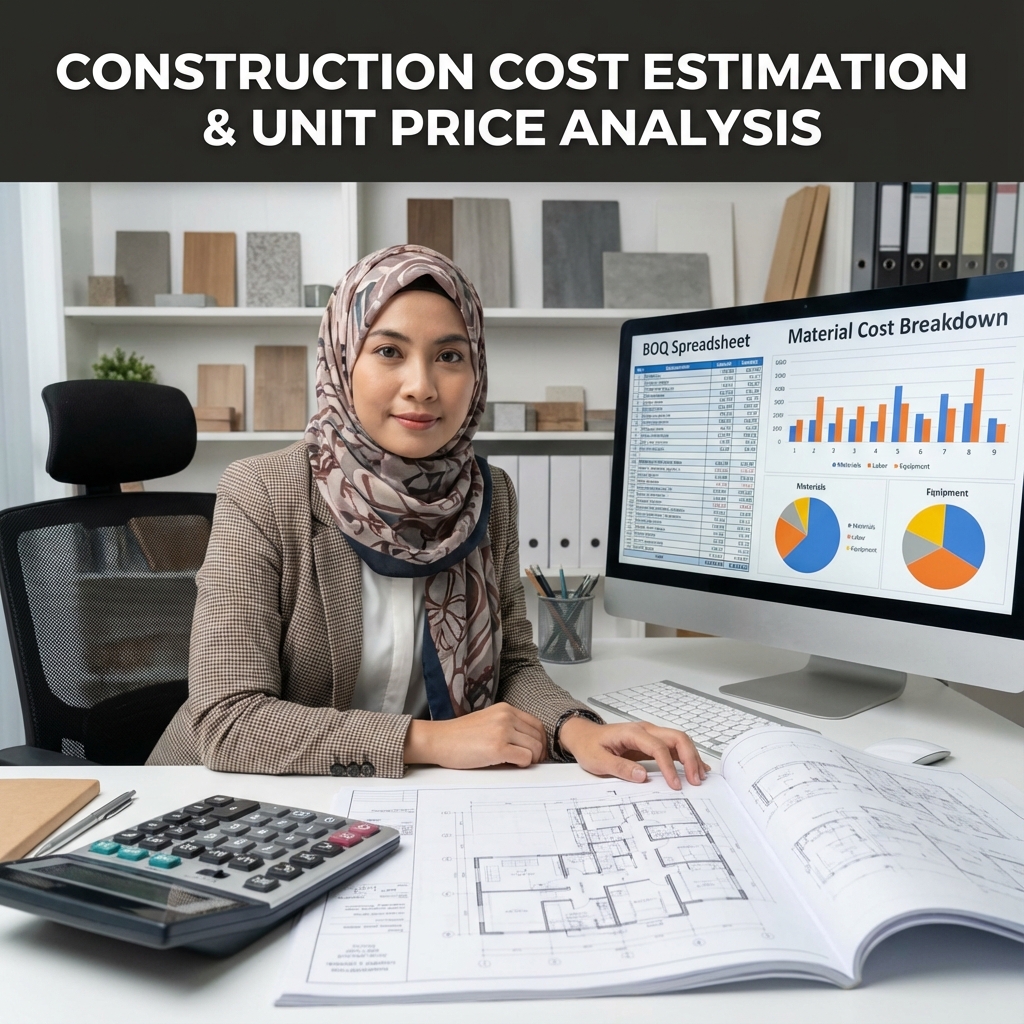
Cost Estimation
Unit Price Analysis in Construction Projects
January 7, 2026
12 min read
إدارة التكاليف في مشاريع البناء: المفاهيم الأساسية
إدارة التكاليف في مشاريع البناء هي إحدى أكثر الوظائف تأثيراً على نجاح المشروع أو فشله. مشاريع كثيرة وضوءها في البداية لكنها تنتهي بخسائر فادحة بسبب ضعف الرقابة على التكاليف وغياب تحليل التباينات بشكل منتظم. المهندس المتخصص في إدارة التكاليف (Cost Engineer) يُعدّ العمود الفقري للتحكم في الأداء المالي للمشروع.
التكاليف في المشاريع الإنشائية تنقسم إلى ثلاث فئات رئيسية: التكاليف المباشرة (Direct Costs) وهي تكلفة العمالة والمواد والمعدات المرتبطة مباشرة بإنجاز البنود، والتكاليف غير المباشرة (Indirect Costs) كإيجار المكاتب والرواتب الإدارية وأجهزة الاتصال ونفقات السلامة والجودة، والمصروفات الرأسمالية (Capital Expenses) التي تشمل شراء المعدات الثقيلة طويلة الأمد.
تقنيات التقدير التكلفي الحديثة
صناعة البناء تستخدم مناهج متعددة لتقدير التكاليف حسب مرحلة المشروع ودقة المعلومات المتاحة:
- تقدير المقايسة (Analogous Estimating): يُستخدم في المراحل المبكرة جداً بناءً على مقارنة بمشاريع مشابهة. دقته 30-50%.
- تقدير المعاملات (Parametric Estimating): يعتمد على معاملات مُعايَرة (تكلفة متر مبنى، تكلفة سرير مستشفى) لتسريع التقدير. دقته 20-30%.
- تقدير قوائم الكميات (BOQ-Based Estimating): يستخدم الكميات الدقيقة المستخرجة من الرسومات أو نموذج BIM مضروبة في أسعار الوحدة. دقته 5-10%.
- تقدير مستندات التنفيذ (Definitive Estimate): التقدير الأدق يُصحّح وفقاً لإيجار المعدات الآنية وأسعار العطاءات الفعلية. دقته أقل من 5%.
الفرق بين الميزانية والتكلفة المتوقعة عند التسليم
خطأ شائع جداً يقع فيه مديرو المشاريع: الخلط بين الميزانية الأصلية (Budget / BAC) والتكلفة المتوقعة الكلية (EAC). الميزانية لا تتغير إلا بتغيير رسمي في نطاق العمل (Scope Change)، أما EAC فتتغير مع كل تحديث لأداء المشروع. الفرق بين الاثنين (Variance at Completion) يُجيب على السؤال: كم سينتهي المشروع بتجاوز أو وفر عن الميزانية المعتمدة؟
التحول الرقمي وتأثيره على قطاع التشييد والبناء
يشهد قطاع التشييد والبناء العالمي تحولاً رقمياً غير مسبوق، ينتقل فيه من الأساليب التقليدية المعتمدة على الورق والعمل اليدوي إلى بيئات عمل رقمية متكاملة. هذا التحول ليس مجرد استبدال للورق بالشاشات، بل هو إعادة هندسة كاملة لطريقة تخطيط وتصميم وتنفيذ وإدارة المشاريع. التقنيات الناشئة مثل الذكاء الاصطناعي (AI)، إنترنت الأشياء (IoT)، الطائرات بدون طيار (Drones)، والتوأم الرقمي (Digital Twin) أصبحت أدوات يومية في المشاريع الكبرى.
في صميم هذا التحول تكمن الحاجة إلى البيانات الدقيقة واللحظية. الإدارة الفعالة للمشروع تعتمد بشكل كلي على قدرة فريق العمل على جمع وتحليل ومشاركة البيانات بسرعة وموثوقية. هذا يقلل من احتمالية حدوث الأخطاء المكلفة، ويحسن متطلبات السلامة في الموقع، ويزيد من كفاءة استهلاك الموارد والمواد، مما يؤدي في النهاية إلى تسليم المشاريع في وقتها المحدد وضمن ميزانيتها المقررة.
إدارة الجودة والسلامة المهنية في بيئة العمل الحديثة
بالتوازي مع التطور التكنولوجي، تزداد صرامة معايير الجودة والسلامة المهنية للحفاظ على الأرواح وتقليل الحوادث إلى الحد الأدنى (Zero Harm). برامج السلامة لم تعد مجرد ملصقات تحذيرية، بل أصبحت تتضمن تحليلات تنبؤية تستخدم بيانات الحوادث السابقة وتراقب سلوكيات العمال لتحديد مناطق الخطر قبل وقوع الحوادث. يتم تدريب الفرق عبر الواقع الافتراضي (VR) لمحاكاة بيئات العمل الخطرة دون تعريضهم لخطر حقيقي.
أما على صعيد الجودة، فإن رقمنة التفتيش والاستلام (Digital Inspections) تضمن توثيق كل خطوة بدقة متناهية، مما يقلل من النزاعات عند تسليم المشروع (Handover) ويضمن أن كل عنصر قد تم تنفيذه وفقاً لأعلى المعايير والمواصفات الهندسية المعتمدة.
التوجه نحو الاستدامة والبناء الأخضر
لم يعد البناء مقتصراً على إقامة الهياكل الخرسانية والفولاذية، بل أصبح يُعنى بشكل أساسي بالتأثير البيئي لهذه الهياكل. مفهوم الاستدامة والبناء الأخضر يُركز على تقليل البصمة الكربونية للمواد، تحسين كفاءة استهلاك الطاقة والمياه، وتوفير بيئة صحية لشاغلي المبنى. استخدام مواد بناء مُعاد تدويرها وتطبيق أنظمة طاقة متجددة أصبحت اشتراطات أساسية في العديد من الأكواد الحديثة.
في النهاية، التكامل بين الإدارة الذكية للتكاليف والجدول الزمني، واستخدام التكنولوجيا الحديثة، وتطبيق معايير الاستدامة الصارمة، هو ما يخلق بيئة بناء متطورة قادرة على تلبية احتياجات الحاضر دون المساومة على متطلبات المستقبل.
👷
م. سامح بدوي سيد
مهندس مدني ومتخصص في BIM وإدارة المشاريع. خبرة في التخطيط وإدارة التكاليف في منطقة الشرق الأوسط. مؤسس منصة BIMitPlaniT.
📊 What is Unit Price Analysis?
Unit Price Analysis (or Rate Analysis) is the process of breaking down the price of any item in the Bill of Quantities (BOQ) into its fundamental components to accurately determine the true cost. This process is the cornerstone of professional pricing and enables contractors to submit competitive yet profitable bids.
When submitting a bid, a pricing engineer must know exactly "where the number comes from" for each item. This is fundamentally different from guessing or blindly transferring prices from previous projects.
🔧 The Four Components of Unit Price
Every unit price consists of four main elements:
1. Material Cost
Includes all raw materials required to execute the item, such as cement, sand, steel, and bricks. When calculating, consider:
- Current Prices: From approved suppliers (get recent quotations).
- Wastage: Varies by material type (e.g., bricks 5%, tiles 10%, steel 3%).
- Transportation: From supplier to site.
- Storage: If there are additional storage costs.
2. Labor Cost
Depends on Productivity Rates according to CSI standards or local experience:
- Productivity Rate: How many units does a worker/crew produce per day?
- Crew Composition: Number of skilled, unskilled workers, and supervisors.
- Labor Wages: Daily or hourly rate for each category.
Labor Cost per Unit = (Daily Crew Wages) ÷ (Daily Productivity)
3. Equipment Cost
Includes machinery and equipment needed to execute the item:
- Equipment Rental: By hour, day, or month.
- Fuel and Oil: Daily fuel consumption.
- Operator: Operator wage if not included in rental.
- Maintenance: Depreciation and periodic maintenance percentage.
4. Overhead & Profit
Added as a percentage on total direct costs:
- Overhead: Office expenses, management, insurance, bonds (typically 10-15%).
- Profit: Target profit margin (varies by competition and risk).
📝 Practical Example: Analyzing Reinforced Concrete Price per Cubic Meter
Let's price "Column Reinforced Concrete Casting" with 350 kg/m³ cement content:
A. Materials:
| Item | Quantity | Price | Total |
|---|
| Cement | 0.35 ton | $100/ton | $35 |
| Sand | 0.4 m³ | $25/m³ | $10 |
| Aggregate | 0.8 m³ | $30/m³ | $24 |
| Rebar | 100 kg | $0.8/kg | $80 |
| Total Materials | $149 |
B. Labor:
Casting and rebar crew produces 8 m³/day, with daily cost of $200:
Labor Cost = 200 ÷ 8 = $25/m³
C. Equipment:
Mixer, pump, and vibrator with daily cost of $150 for producing 20 m³:
Equipment Cost = 150 ÷ 20 = $7.5/m³
D. Total:
- Direct Cost = 149 + 25 + 7.5 = $181.5/m³
- + Overhead (15%) = $27.2
- + Profit (10%) = $18.15
- Final Unit Price = $226.85/m³
💡 Tips for Accurate Pricing
- Use local productivity rates, not just international ones.
- Get quotes from at least 3 suppliers.
- Don't forget wastage, transportation, and storage.
- Document every analysis for future reference.
Next Article: Detailed Cost Breakdown Structure (CBS)